Thursday, January 20, 2022

Weaving meaning into every strand of life


Common advice says we need to “walk our talk.”
 

    Of course that’s true, our actions need to reflect our beliefs and values, however, that does not mean it is easy, especially in our fast-paced, over-busy, information-flooded world. Most of us spend about half of our waking life focused on the beliefs, values, and purposes of others (employers and schools), moving rapidly through our daily requirements without slowing down to savor the meaning of our own precious lives. 


    “Who has time to slow down?” we wonder.


    The answer reverberates with more questions:

    “Who has enough life to not slow down long enough to live it?” 

    “Who am I really?” 

    “What is my life’s meaning?” 

    “Where am I going, and when I hit the rocky shores of trouble and loss, what will give me the strength to carry on?”


    I am 76. I have time to slow down … if I truly walked my talk, I would slow down and focus on the meaning of life … the meaning of my life.


    In mid-2021, I began a new project: more of a gathering than a construction. It started out simply enough … reprint my gratitude journal (Gratitude Miracles) as a letter-sized workbook. Then I went off-script and began to wander and wonder, harvesting nuggets of wisdom as I walked through my days.


    As I wandered, the journey became an onion peeler, gradually removing one layer after another, revealing an essence and a connection to the Universe that I had not previously experienced. One question began to surface … what is the meaning of life? Or, perhaps more truly, “What meaning does life hold?” I began to realize that life … whatever it is … holds the meaning I’ve given it. If I don’t give the world around me meaning, then I’m living in a meaningless Universe.


    At about this moment, another nugget of wisdom rolled onto my path. It looked like just another Facebook post but it shimmered as I picked it up. Sweet grass. Braided sweet grass. Simple. Little did I know sweetgrass was medicine. Kindness medicine. I felt a shifting in my heart … in my being. I wanted to begin again and bring meaning alive, immerse myself, until I saw the shining in every tree and wild turkey roaming through my oak-forest world.


***


The post offered words from Anishinabe Elder Wally Chartrand and began by telling about a common plant, abundant and free, more than a plant, a wisdom teacher. Here it is, with some of the lessons I took away ...


“Sweetgrass - a kindness medicine - has a sweet gentle aroma when we light it.”


The message can’t be rushed or crowded; must be repeated, savored, honored for the wisdom it holds, the beckoning it brings. Sweetgrass. Kindness medicine. How slowly it ripens.


    “We use 21 strands of sweetgrass to make a braid. The first seven strands represent those seven generations behind us - our parents, grandparents, and so on back for seven generations. Who we are and what we are is because of them. They’ve brushed and made the trails we have been walking up until now. The old people tell us that it takes longer for us to heal today and the reason is because the old trails our ancestors used to use to find us have been destroyed. They’ve built dams which have destroyed the old trails. They’ve built towns and cities where the old trails used to be. So now our ancestors are having a harder time trying to find us to help us heal.”


“Who we are and what we are is because of them.” 


I, who knows little of my own seven generations, 

am like a hairless infant alone in a wilderness, 

exposed to the elements. Who am I? 

resounds into the distance.


    "The next seven strands represent the seven sacred teachings: love, respect, honesty, courage, wisdom, truth, and humility. The old people tell us how simple, powerful and beautiful the teachings are. Love - a very simple teaching. Respect - a powerful teaching. Humility - a beautiful teaching. When we truly understand the teaching of humility - that I am not any better than anyone else and you are not any better than me, and that at the end of the day we are all simply human beings - this is what makes this teaching powerful and beautiful."


“Humility: At the end of the day we are all simply human beings.” 


This unlearned lesson is tearing us all apart, 

filling my own spirit with a need to be special, 

a yearning to be recognized.


    "The only thing wrong with the teachings is that we don’t walk them everyday. Love is only a four-letter word. It’s when we walk that love, when we show it, when we live it, that’s what makes these teachings powerful and beautiful. One other thing we are reminded is that how can we love someone else if we don’t first love ourselves. How can we respect another if we don’t first respect ourselves. They tell us that the teachings need to first start from within ourselves."


“… the teachings need to first start from within ourselves.” 


My journal project is an attempt to teach myself wisdom 

and how to walk it. While I sometimes wish I could have 

come to this point earlier in my life, I know that 

I wasn’t ready. Now, I’m at a turning point 

where I might be ready. But, ready for what?


    "The last seven strands are for the seven generations in front of us: our children, our grandchildren, and those children yet to be born. Why are they important? Everything we do to Mother Earth will one day affect them. Right now the earth gives us everything and anything we can possibly want to have the life we have, but if we don’t look after her, what’s going to be left when it’s their turn? The circle that’s around me today, is that the same circle I want to pass on to them? Especially if my circle involves alcohol abuse, drug abuse, family violence, lying, stealing or cheating. Sometime it’s up to us to break the cycle, and hopefully replace it with something better."


“Sometime it’s up to us to break the cycle, and hopefully replace it with something better.” 


Am I breaking the cycle? 

I chose to not have children; however, 

that does not remove my responsibility 

to the next seven generations. 

What can I do? What will I do?


    "When my son was born I made him a promise that we wouldn’t cut his hair till he was seven years old. We cut it eight years ago (he’s 15 today) but when he was four years old he already knew this teaching, because every morning as I’d get him ready for daycare, I’d braid his hair. I’d ask him, "Misko what does your braid represent?”


"Sweetgrass," he’d say.


"What does sweetgrass represent, my boy?" I’d ask.


"Kindness," he’d say.


"And what does each of your braids represent, my boy?”


"My mind, my body and my spirit," was his reply.


"Okay, what are you going to do at daycare today, my boy?" I’d ask.


"Dad, I’m going to be kind to my mind, my body and my spirit," he’d say.


"Awesome my boy!!! What’s going to happen if you do that today?" I’d ask.


"He’d say, "Dad! I’m going to be STRONG !!!!”


"You see that’s the second teaching that comes with this medicine. It’s through our kindness that we are most strong. Anybody can raise their fist at anyone else. Anyone can use their words to hurt or put someone down. But when we have someone in our face trying to hurt us with their actions or words, and we still love, respect and show that person kindness... that takes a lot of strength!!!!"


***


So I wonder:


How am I,

        in this universal daycare,

        going to learn how to be kind

        to my mind, body and spirit?


        How am I,

        one woman, small and frail,

        going to break the cycle,

        to find peace in the chaos?


        How am I,

        braided with my own skills and talents,

        going to share what I learn

        and be strong in the face of challenge?


                    -- Joyce Wycoff

Wednesday, December 29, 2021

Layered Heart of Emotions: Naming and Claiming Our Feelings

by Joyce Wycoff and Lynne Snead

"Emotion is the chief source of all becoming-conscious. 
There can be no transforming of darkness into light 
and of apathy into movement 
without emotion." 
— Carl Jung

Elementary science class told us there are 206 bones in our bodies, 26 of which are in our feet. That information was generally accompanied by a basic overview of the various body parts, organs, and systems. However, little was said about emotions, and it wasn’t until 2017 that researchers identified 27 different emotions and clumped them into six basic types: 
Happiness
Sadness
Fear
Disgust
Anger
Surprise

Hundreds, if not thousands, of charts and wheels have been created in an attempt to clarify an apparently endless number of more nuanced descriptions of emotions. 

One might ask “Why?”

The work of Candace Pert, the scientist who discovered the opioid receptor and the idea that the molecules of emotions are our subconscious body, was a wake-up call to the importance of emotions and understanding their effect on our well-being. Since then, a lot of research has confirmed the power of naming our emotions. The ability to name our feelings makes us more aware of them, reduces their intensity, and gives us more power to handle them and the behaviors they stimulate.

Michael Miller states, 
“Naming emotions seems to bridge the gap between thoughts and feelings. 
The step from “I am this…” to “I am feeling this…”, or even, 
“Michael is feeling this…” means that we are not that emotion exclusively.”

As we approached the section of Gratitude Mojo journal devoted to emotions, we were looking for simple ways to “name and claim” our emotions. Joyce repurposed a bracelet to help her learn more about her emotional territory, however, it didn’t make sense to include a bracelet with every journal, especially since it seems like this territory varies for everyone. Plus the bracelet didn’t offer a way to reflect intensity of feelings nor our ability to express them and choose appropriate behaviors.

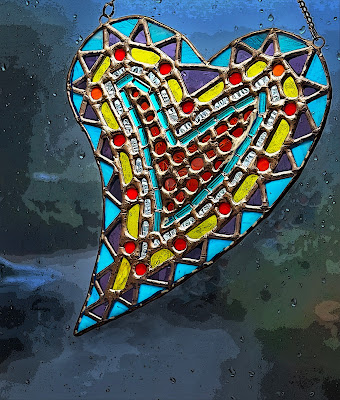
The longer we looked at the complicated wheels and charts related to feelings, the more we wanted something different, more useful, more engaging. One day as Joyce was writing in her journal, she gazed out the window at the cold, blustery and rainy day. Against that wintery backdrop, a stained glass heart stood out, bright and beautiful. 

As she was pulled deeper and deeper into its layers, a metaphor emerged, each bright layer representing variations of comfort and vulnerability. Clearly, expression of some emotions is easier than others; some are closer to the surface, others much deeper in our core, seldom revealed and sometimes hidden even from ourselves. Exploring those layers of expression, could bring us greater understanding of those lesser understood layers of ourselves.

Most of us are comfortable expressing happiness but less willing to express feelings of insecurity. We may easily express irritation while withholding the hurt feelings that come when we feel unseen or unheard. Expressing some fears, such as the fear of spiders or heights, is common and often a source of amusement, others such as the fear of abandonment or the fear of intimacy are generally much more difficult to explore and express.

The stained glass Layered Heart offers a simple metaphoric guide to exploring your own emotional territory, a never-ending journey revealing some of the infinite and wondrous layers of your own being. An overview of the layers with a few suggestions are offered below and in the Gratitude Mojo journal there is an accompanying section to further help you develop your feelings and a gratitude for all they do to make us who we are. 

Also included below is a feelings chart to help you find names for some of your feelings.


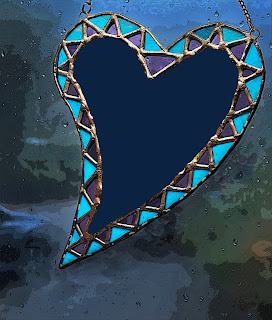
Outer layer: The aqua and purple triangles are what you easily show to the world. A combination of light and dark, you could look at these as the feelings that are close to the surface, both positive and negative. Typically this layer includes, happiness, surprise, satisfaction… irritation, worry, moodiness.
What emotions would you associate with this layer?


Outer layer 2nd: The red dots and yellow-green oblongs layer is another dual layer that reminds us that emotions are both positive and negative. Typical emotions in this slightly reserved layer might include: joy, gratitude, contentment … disappointed, blue, anxious.
What emotions would you associate with this layer?


Outer layer 3rd: The mottled, crystal layer is buried a bit deeper but still contains a mix of positive and negative, although positive emotions are easier to express since they are more socially acceptable. Typical feelings here might include: pride, tenderness, satisfied … mad, frightened, regretful.
What emotions would you associate with this layer?


Inner layer 2nd: The turquoise layer deeper in your core is where negative emotions are being held down and there is fear of expressing positive emotions except to trusted others. Typical feelings here might include: love, excitement, elation … anger, grief, shock.
What emotions would you associate with this layer?


Inner core: The red core of your heart is vulnerable. It holds the emotions only revealed when you feel safe. Typical emotions here are shame, abandonment, rejection, betrayal, hopelessness, fear of being visible.
What emotions would you associate with this layer?

Emotions chart from Happier Human 


We hope this process helps you explore the deeper emotions of your self and would love to hear your feedback in the comments section.

For more about how to get the Gratitude Mojo journal, email info@gratitudemojo.com.

Special thanks to Rodney Meador who created the stained glass heart and welcomed me on my first day at the Morro Bay Gallery and asked if I would trade art with him. I did so gladly and it became one of my treasures that made the cut in every downsizing that followed. Little did I know it would become a key that unlocked a mystery many years later. Thank you, Rodney!

Thursday, December 9, 2021

DIYW: Gratitude Practice for Photographers


“Everything is a gift.”

— David Steindl-Rast

There aren’t many things in life which everyone agrees on anymore … “gratitude is good” seems to be one of the few left. Over the past two decades, numerous studies have shown that expressing gratitude makes us happier, healthier, more likely to succeed, and more resilient. If there were such a thing as a panacea, gratitude might be it.

However, all of these studies were based on doing something to express gratitude … whether it was writing a note to someone who helped you, writing in a journal (even once a week), or saying thanks at the dinner table. Practicing gratitude is the key to unlocking dopamine and serotonin, the “feel good” hormones that produce positive effects.

In order to make gratitude a regular practice, it’s important to integrate it into your life in a way that makes it enjoyable. No one needs another chore to make us feel bad or guilty about not doing it. So, how can you DIYW (Do It Your Way for those of us over a certain age)?

Link it to something you already enjoy.

I’m a photographer and love looking at past photos or having a reason to go out and shoot something new and interesting. Here’s one way I’ve linked photography to my gratitude practice.

Take or find a photo of an interesting scene then find all the things you can be grateful for in that scene. Try to find 3–5 for each scene.


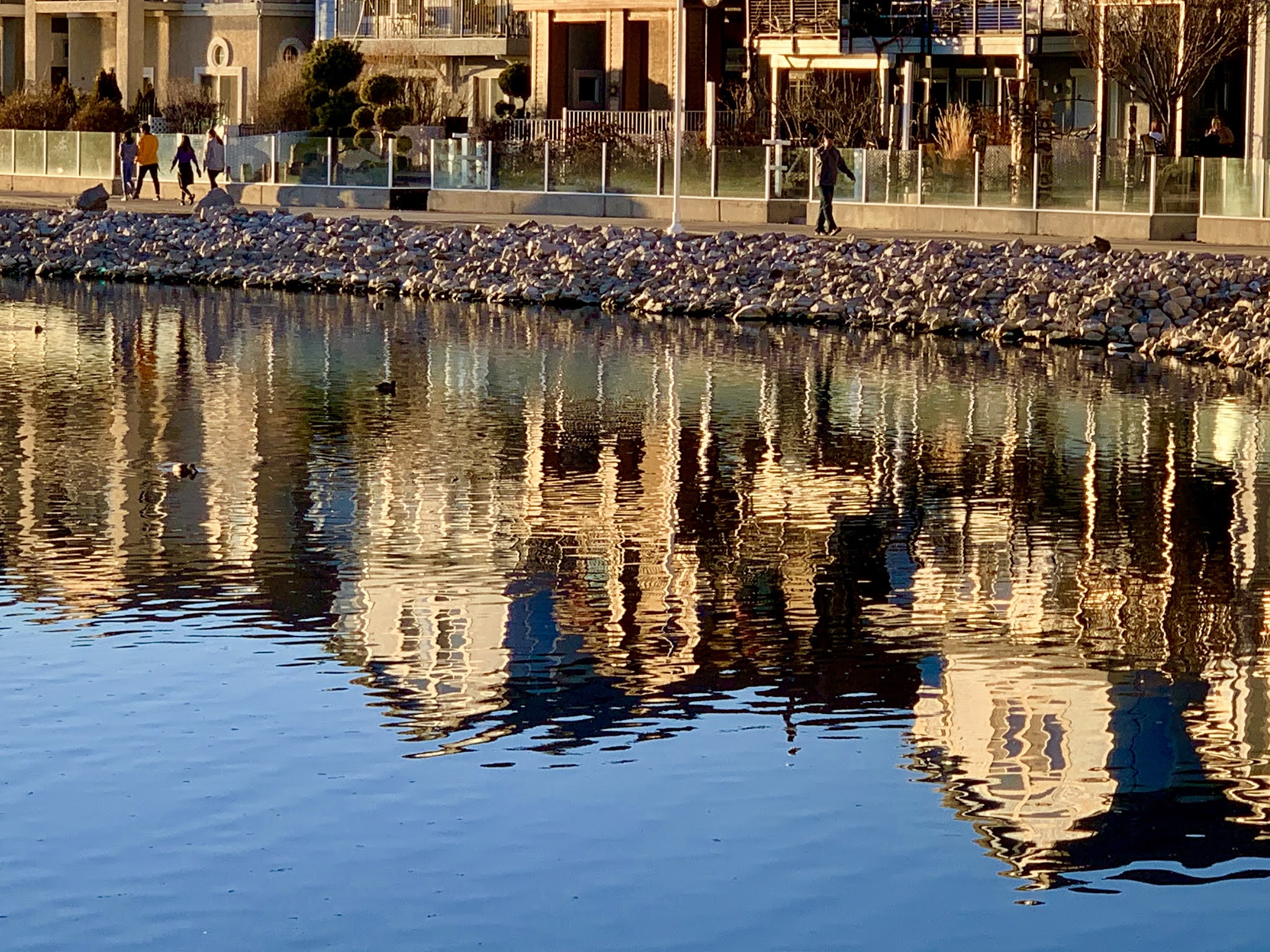
Sparks Marina, Reno, Nevada

My gratitudes:

  • I am grateful to have had this beautiful place to walk when I was in Reno … who even knew that Reno had a Marina? … and for the incredible day and light that made this photo possible.
  • I’m grateful for reflections that turn ordinary scenes into works of art.
  • I am grateful for color that makes my heart leap as nature displays itself as a master colorist.
  • I am grateful for my fellow walkers enjoying the beauty of the day.


Arkansas ice storm 2009

I wasn’t particularly grateful when I took this photo as it destroyed so many beautiful trees and shut power down for ten days. However, when I looked at it later, I was grateful the beauty and the memory.

My gratitudes:

  • I am grateful for the frozen beauty of the morning glistening against the passing ice storm.
  • I am grateful for trees hardy enough to withstand Nature’s icy fingers.
  • I am grateful that I had time to enjoy the beauty of the Bradford pear trees which lined our driveway before they were lost to this ferocious ice storm.
  • I am grateful to have a warm place to sleep even when the weather is treacherous.
  • I am grateful that I had family who took us in when our power went out for ten days.
Maggi on Thanksgiving at Costco

This is Maggi, my dancing inspiration spirit guide. In search of indulgence with a non-vegan pie after a long day of trying to be “good,” we headed off to a mostly empty Costco where she terrorized the few shoppers in the store and cackled all the way. It’s an especially sweet memory since she died a few months later.

My gratitudes:

  • I’m so grateful we got to spend Thanksgiving together.
  • I am grateful that Maggi was part of my life.
  • I am grateful for friends who always make me laugh.
  • I am grateful for friends who expand my Universe and add to my wisdom.
  • I am grateful for Maggi who taught me how to meet death, still laughing all the way.

Click here.

As I’ve put these together, I’ve decided to create a personal photo book to be called My Gratitudes, Volume 1. If you decide to try this, please leave a comment below.


Wednesday, December 8, 2021

Gratitude Mojo: My gift to the world


I am water and stardust
walking through day
treading on earth
receiving a cedar branch
receiving belonging.

watching
sunlight make sugar
in the graceful, bright
Ponderosa needles.

watching a bee
gather nectar
in a yellow flower.

me witnessing him
he witnessing me

time is not
what the world wants.
it wants my attention,
my devoted,
passionate
attention.

--Joyce Wycoff

Saturday, December 4, 2021

Breakups can be positive emotional change agents

 "Discovering the truth about ourselves 

is a lifetime's work, but worth the effort." 

-- Fred Rogers


by Joyce Wycoff

It’s common …

    - words said

    - actions taken

    - feelings hurt

    - anger sparked.


The particular details of my breakup aren’t all that interesting nor unusual. A 30-year friendship blew up in a lightning strike of stress, misunderstanding, and insecurities, leaving a burned out shell in an empty field.

My reaction was a spiraling whirlwind of emotions: disbelief, anger, hurt, abandonment, sadness, and rejection as I wanted to lash out, shut down, wallow in self-pity, and hurt her back. Another friend has been coaching me on recognizing and naming my emotions. Suddenly, I was flooded with a whole dictionary of them.

I proceeded to a self-satisfying round of rehashing and re-storying the whole precipitating event, building up my sense of righteousness and driving my stake deeper into moral high ground. I wrote mental letters defending myself, spun spiteful fantasies, imagined future groveling on her part, which, in my fairy princess mode, I would either accept or reject with a simple wave of my wand as I flitted off to other sky castles.

Fortunately, I also took more productive action by writing in my gratitude journal. Gratitude Mojo, the gratitude journal a friend and I are creating and using as we continue along this journey, has what we call “dot pages,” blank, dotted pages with nothing other than an inspiring quote on them. I began to fill up dot pages with mindmaps and lists focusing on what happened and our history together.

"Everything is a gift!"

-- David Steindl-Rast

I put a virtual “Everything is a gift!” sticker on it, gave myself a gold star for being enlightened, and felt better. I thought I was done. Wrong.

Rehashing the past and re-storying the future continued. I definitely wasn’t being attentive to the present moment and soon realized there were old wounds being poked. My standard way of dealing with emotions and my emotional history was to stuff them in the closet and turn to “doing” … writing, researching, planning … escaping.

However, every day, Gratitude Mojo asked me the same question: what am I grateful for? and waited for an answer … those blank spaces just sitting there patiently awaiting my response. And every day for weeks, I responded with things outside the wound. My life is amazing and there are a zillion things to be grateful for. I thought expressing gratitude for my beautiful life would make the hurt go away.

While it did dampen intensity, there was still this black hole sucking energy into its center. My imagination kept creating future stories … possible apologies, potential reconnections, dramatic scenes of triumph and payback.

As Leonard Cohen says so beautifully, “There is a crack in everything; that’s how the light gets in.” One day, with about an hour and a half of driving in front of me, a bit of light peeked through a crack as I turned on a tape of Candace Pert talking about the molecules of emotion. Candace was the scientist who discovered the opiate receptor as a graduate student and went on to posit that the body is our subconscious mind. What I heard on that tape was that emotions are real; they are part of the soup that runs our body. We need to pay attention to them.

This wasn’t the first time I had heard this, of course; I had read her book Molecules of Emotion decades before. On this day however, the message struck a new chord and pulled me into thinking about emotions, my emotions, and how their dance around this drama with my friend were binding me to a host of negative emotions. No wonder I was suddenly craving sugar.

It challenged me to think more deeply about my history, my emotional history, and its role in this conflict. Out of that struggle, I began to believe that the gratitude journal needed to include information and space for regularly exploring our emotions, these critically important pieces of our being.

So, a new page was developed and I began to use it and see this breakup, and my friend, as change agents in my life, giving me a chance to re-examine, and possibly heal, a wound from childhood.

Years ago I had created an intention bracelet with six major beads, so I turned it into an artifact to help me focus on and understand which emotions were in play whenever something new came up. Today, while writing in my gratitude journal I realized that my feelings had shifted.

Rather than focusing on proving myself right, I reconnected with my long history with this friend and just wanted to feel compassion for what she was going through (she had recently lost her husband) and leave the door open to whatever future direction our friendship might take.

At the same time, I am committed to befriending myself with compassion and not burying my emotions for the sake of keeping someone else happy or maintaining “peace.”

I know the journey isn’t over, however, some lessons are already clear:

    - it doesn’t matter who started the drama.

    - the fodder for the fire of conflict builds up over time like forest undergrowth, waiting for the spark which becomes a wildfire. Honest, open conversation is relationship maintenance, cleaning away the flammable debris.

    - emotions are in play whether or not we want them to be. The actions we take, however, are choices we make and are best made on the basis of what we truly value.

    - people change, life circumstances change, someone else’s actions are not about me and I should not take them personally.

Positive Action Possibilities

Possible ways out of rehashing or ruminating are offered by Linda Wasmer Andrews in an article published by EverydayHealth.com. She suggests distracting yourself, stating that even eight minutes of distraction can break the cycle and lift your mood. Try physical activity (my favorite is dancing around the house to music with an intense beat), hobbies, or any form of play. You could also brainstorm small steps to get past whatever you’re stuck on … or write your gratitudes in your gratitude journal!

Click here.
As for me, I will most likely need to read this article more than once as I continue to learn the lessons my emotions offer me.


Gratitude Mojo is the new, advanced journal for gratitude practice which takes you even deeper into the amazing gifts of gratitude. 


Gratitude Miracles, the 5-minute journal that could change everything! is available at amazon.com. Click Here.


Reference: 


“Overthinking? It Could Be Depressing You,” 

Linda Wasmer Andrews November 14, 2017

Tuesday, November 30, 2021

Gratitude Journaling: 12 ways this practice transforms your life

Lynne Snead's Gratitude Spot
If you’re not keeping a gratitude journal yet, maybe these snippets from scientists and leading thinkers and publications will jump start your practice. There could easily have been 100 snippets here … but the point isn’t to read about keeping a gratitude journal … the benefits only come when you DO it.

In 2016, the Gratitude Miracles Journal grew out of Joyce Wycoff's personal intention to practice gratitude in a way that combined all the science with the easiest, fastest way to embody gratitude. Available on amazon.com.

In early 2021, Joyce joined forces with her co-author Lynne Snead to take gratitude journaling to the next step and Gratitude Mojo was born as a bigger, better way to get the amazing benefits of this practice.

Click here.

The BIG One: Be Happier. The best way to reap the benefits of gratitude is to notice new things you’re grateful for every day. Gratitude journaling works because it slowly changes the way we perceive situations by adjusting what we focus on. While you might always be thankful for your great family, just writing “I’m grateful for my family” week after week doesn’t keep your brain on alert for fresh grateful moments. Get specific … Read more here: The Science Behind Gratitude

Gratitude Makes You Love Your Life. When you live your life in gratitude, you maintain an awareness of all things that are good in your life and focus less on what’s not working. When you acknowledge what is going right in your life, it’s impossible to become stuck in negativity. Gratitude keeps you thankful, happier, and more positive. Read more here: 6 Ways to Love Your Life More.

Attract More Good Stuff. Appreciation is one of the highest emotional states you can experience. When you cultivate gratitude, you’re able to feel true joy and contentment, no matter what you have or don’t have in your life. And since the Law of Attraction states that like attracts like, when you’re grateful for what you already have, you will naturally attract more for which you can be grateful. Read more here: 6 Daily Gratitude Habits

Be Healthier. Studies have shown that people who regularly practice feeling thankful have a leg up when it comes to their health. Robert Emmons, a psychology professor at the University of California at Davis, has been a leading researcher in this growing field, termed “positive psychology.” His research has found that those who adopt an “attitude of gratitude” as a permanent state of mind experience many health benefits. Read more here: A Dose of Gratitude

Greater Success. Science tells us that people who are thankful for what they have are happier and reach their goals with greater ease. Your future health and happiness depends largely on the thoughts you think today. So each moment of every day is an opportunity to turn your thinking around, thereby helping or hindering your ability to think and feel more positively in the very next moment. Starting and/or ending each day by thinking of something you're grateful for is one way to keep your mind on the right track. Read more here: The Many Benefits of Expressing and Receiving Gratitude

Higher Energy. In adults with neuromuscular disease, a 21-day gratitude intervention led to higher energy, more positive moods, a greater sense of connectedness with others, more optimistic ratings of their lives, better sleep duration, and better sleep quality (Emmons). Read more here: The Benefits of Adding Gratitude to Your Attitude.

Teaches Self-Discipline. One of the biggest struggles writers deal with is the ability to sit down and put pen to paper, even when they don’t feel like it. Starting off slow makes it easier. A gratitude journal can have a double-whammy effect in this case, teaching you to be thankful for what you have while also making you learn to discipline yourself to do a task for a few minutes at a time. It’s a great way to learn self control for any aspect of your life.

Improves Psychological Health. Gratitude reduces a multitude of toxic emotions, ranging from envy and resentment to frustration and regret. Robert A. Emmons, Ph.D., a leading gratitude researcher, has conducted multiple studies on the link between gratitude and well-being. His research confirms that gratitude effectively increases happiness and reduces depression. Read more here: 7 Scientifically Proven Benefits of Gratitude

Less Physical Pain. Indeed, it seems there are few conditions or examples in which gratitude doesn’t appear to have a positive effect. A psychologist from the University of Birmingham noted in 2013 that the “list of potential benefits is almost endless: fewer intellectual biases, more effective learning strategies, more helpfulness towards others, raised self-confidence, better work attitude, strengthened resiliency, less physical pain, improved health, and longevity.” Read more here: 5 Scientifically Proven Benefits of Gratitude

Makes People Like Us. A few minutes a day with your gratitude journal can increase your long-term well-being by more than 10 percent.a1,a2,a3 That’s the same impact as doubling your income! Read more here: 31 Benefits of Gratitude

Sleep Better. Greater Good reports ... perhaps the most popular practice is to keep a “gratitude journal.” As we’ve reported many times over the years, studies have traced a range of impressive benefits to the simple act of writing down the things for which we’re grateful—benefits including better sleep, fewer symptoms of illness, and more happiness among adults and kids alike. We’ve even launched our own digital gratitude journal, Thnx4.org, here on . Read more here: Tips for Keeping a Gratitude Journal

Ability to Focus Improves. In today’s society, keeping a gratitude journal is a must for all up and coming Career Girls. In her latest book Thrive, author (and powerhouse) Arianna Huffington explains the huge role her gratitude journal had in propelling her to success, and honestly, it makes perfect sense. Read more here: Gratitude Journal - First Step to Success